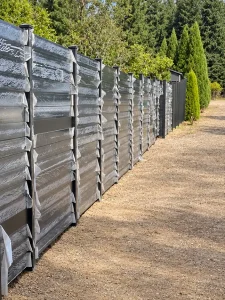
Aluminum Fence for High Wind Areas | Design & Buyer Checklist
Choosing aluminum fencing for an exposed site starts with the complete system: privacy level, panel geometry, posts, connections and foundations. Use this guide to prepare a clearer specification before requesting a custom fence quotation.
Discuss Your Fence ProjectView the Buyer Checklist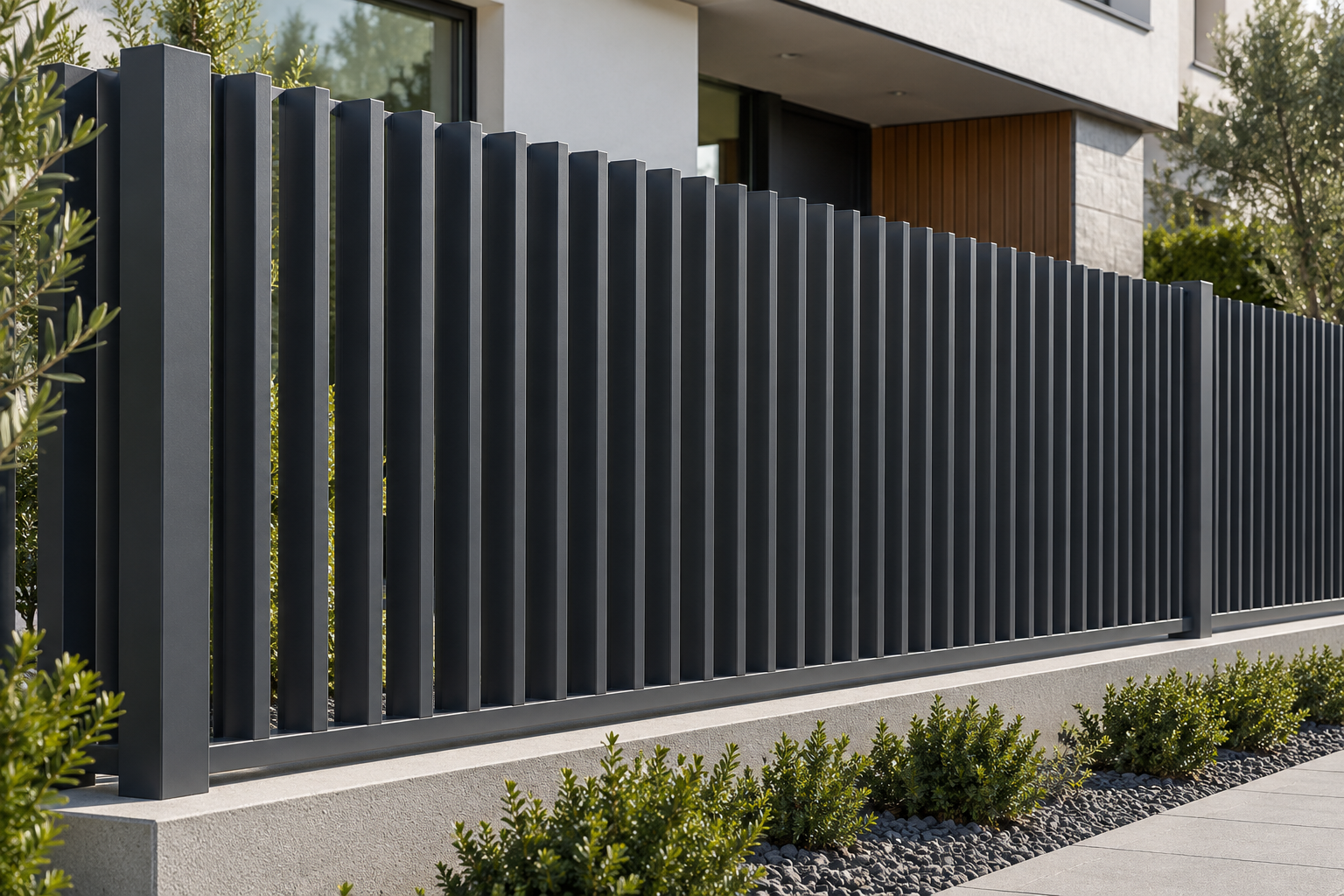
What Makes an Aluminum Fence Suitable for a Windy Site?
Aluminum is a practical material for custom fence panels because it offers low weight, corrosion resistance and a wide range of profiles and finishes. Wind resistance, however, depends on how the assembled fence transfers loads from its infill through rails, brackets and posts into the ground or supporting structure.
A product described as “heavy duty” or “wind resistant” should still be checked against the actual installation. Fence height, panel width, infill layout, post section, fixing details, soil conditions and local design requirements all affect the selection.
1. Balance Privacy, Airflow and Wind Exposure
For a comparable panel size, a more open infill generally allows more airflow than a closed privacy layout. The actual design load also depends on the geometry and applicable design method. A visible gap does not by itself establish a pressure reduction or a wind rating.
Open-Style Fencing
Pickets or spaced blades provide visibility and airflow. Consider this approach where a boundary can remain visually open.
Explore vertical slat layouts →Semi-Privacy Fencing
Spaced slats balance screening with light and air. Confirm the actual clear gaps, slat depth and viewing angle before choosing a design.
Compare slat spacing →Full-Privacy Fencing
Closed or closely spaced infill provides greater screening. Its supporting structure and foundations need to be selected for the resulting loads.
Explore privacy fence options →Horizontal and vertical panels can both be used in project designs. Orientation alone does not determine wind performance. Slat shape, spacing, rails, fixings and the load path matter. Angled louvres also require review; they should not be treated as equivalent to a simple open-picket panel.
For seaside projects, address wind exposure and corrosion separately. Review our coastal aluminum fence solutions for finish and application considerations.
2. Review Posts, Panel Spans and Connections Together
A thicker panel does not compensate for an unsuitable post or connection. The specification should identify each component and how it connects to the next.
| Component | Information to confirm | Why it matters |
|---|---|---|
| Zaunelement | Height, clear width, infill section, gaps and rail layout | Defines the exposed geometry and the panel’s structural arrangement. |
| Beiträge | Profile dimensions, wall thickness, alloy, temper and any reinforcement | Post stiffness and strength depend on the complete section and material properties. |
| Post spacing | Center-to-center spacing, clear openings and end conditions | Changing the span changes panel behavior and the load assigned to each post. |
| Brackets and fasteners | Bracket geometry, attachment locations, screw or bolt details and material compatibility | Connections must transfer forces without excessive movement or local failure. |
| Base or embedment | Base plate, anchors and supporting concrete, or embedded-post details | The support must transfer post forces into an adequate foundation. |


WONDERFUL METAL offers aluminum fence posts with embedded and base-plate mounting options. Published product dimensions are selection references; the required post and fixing arrangement should be confirmed for the project.
Custom panel sizes, including designs based on 8ft × 6ft vertical aluminum fence panels, should be reviewed with their supports. A nominal panel size is not proof of suitability for a high-wind location.
3. Select Foundations for the Actual Ground and Support Conditions
There is no single footing depth or anchor size suitable for every aluminum fence in a high wind area. Foundation selection depends on site conditions, post forces and the applicable local requirements.
Embedded Posts
Provide soil information, slope, drainage conditions and any available geotechnical report. Footing dimensions, embedment and reinforcement should follow the project design.
Base-Plate Posts
Provide concrete thickness, strength, reinforcement, edge distances and the proposed anchor locations. Confirm that the existing concrete is suitable for the connection.
Wall or Retaining-Wall Mounting
Identify the wall material, condition and structural details. Confirm that the wall and its foundation can resist the additional fence loads.
Pavers, thin toppings and unknown masonry should not be assumed to provide adequate structural support. For an existing slab or wall, send photographs and drawings before ordering base plates or brackets.
Changes at corners, ends, steps and transitions should be shown on the layout. These locations may require different details from a typical straight fence run.
4. Include Gates in the Wind-Exposure Review
Large privacy gates present a substantial exposed surface. Their frames, hinges, latches, posts, stops and foundations need to be considered as a system. For automated gates, wind also affects operation and the selection of the automation package.
- Show each gate’s clear opening, leaf dimensions and opening direction.
- Identify swing, sliding or pedestrian gate configurations.
- Provide the infill design and privacy level for each gate.
- Confirm latch, stop and hold-open arrangements with the project team.
- Coordinate automation selection and safe operating requirements with the gate installer or automation supplier.
Browse matching aluminum gates to coordinate the entrance and fence appearance while keeping their structural and operating requirements clearly defined.
5. Buyer Checklist: Information Needed for a Useful Quotation
The more accurately you describe the site, the easier it is to define the manufacturing scope and identify items that still need engineering confirmation.
| Send this information | Include these details |
|---|---|
| Project location | Country, city, postal code and site address or coordinates where available. |
| Local design criteria | Applicable code and edition, specified wind criteria and any engineer’s design brief. Include the definition and units of any wind-speed value supplied. |
| Surrounding terrain | Open land, waterfront, hilltop, slope or built-up surroundings; photographs in several directions. |
| Fence layout | Total length, individual runs, corners, ends, level changes, height above ground and proposed post positions. |
| Privacy requirement | Full privacy, semi-privacy or open style; preferred slat section, spacing and reference images. |
| Ground and foundations | Soil report if available; proposed footing details, or existing slab and wall drawings. |
| Gate schedule | Quantity, clear openings, leaf sizes, opening method, infill and automation requirements. |
| Commercial requirements | Quantities, color, packing, destination, delivery scope and target installation date. |
| Required documentation | Drawing approval, material information, project calculations or test evidence required by the buyer or approving authority. |
A Ready-to-Use Inquiry Template
If a detail is unknown, mark it “to be confirmed.” Distinguish an initial budget quotation from a final order specification. Our custom aluminum fence quote guide explains the purchasing information to prepare.
6. Compare Quotations on the Same Basis
A price per panel is useful only when the supply specifications match. Compare the complete package: infill, rails, posts, brackets, fasteners, finishes, packing and any separately supplied foundation or gate hardware.
- Confirm the design basis: what site criteria and panel configuration were used?
- Check technical evidence: does it apply to the quoted dimensions, supports and connections?
- Review exclusions: who provides foundations, anchors, local engineering and installation?
- Agree the approval sequence: which drawings and project requirements must be confirmed before production?
- Control changes: recheck the design if height, span, infill or mounting conditions change.
Do not add privacy strips, screens, banners or other attachments after installation without reviewing their effect on wind loading. They can change the behavior of an originally open fence.
Custom Fence Supply from WONDERFUL METAL
WONDERFUL METAL PRODUCTS CO., LTD supplies custom aluminum fencing and matching gates, with an office in Qingdao and manufacturing in Linqu, Shandong. We work with contractors, distributors and project buyers to define product dimensions, finishes, packing and the agreed supply scope.
For an exposed project, send your site information and design brief alongside the preferred fence style. Any required project engineering, testing or approval documentation should be identified and agreed before the order is finalized.

Explore our custom aluminum fence manufacturing service und fence and gate project collection.
Häufig gestellte Fragen
Is aluminum fencing suitable for high wind areas?
It can be considered when the complete system is designed for the site. Material choice alone does not establish suitability; panels, posts, connections and foundations must be evaluated together.
Is a semi-privacy fence always wind-rated?
No. Gaps allow airflow, but a wind rating requires evidence for the relevant configuration and design conditions. Semi-privacy describes an appearance and screening level.
What post size or footing depth should I order?
The answer depends on height, spacing, infill, wind criteria and ground or support conditions. Provide the project information before selecting final post and foundation details.
Can a full-privacy aluminum fence be used on an exposed site?
Potentially, subject to project design. A closed layout needs appropriate supports, connections and foundations for its loads. Confirm feasibility and documentation before ordering.
Does a powder-coated finish improve structural wind resistance?
Powder coating is a surface finish. It does not establish the structural capacity of a fence or replace checks on the aluminum sections, connections and foundations.
Does WONDERFUL METAL claim a universal wind rating?
No universal wind-speed rating is stated in this guide. Required performance and any supporting documentation must be confirmed for the specific quoted system.