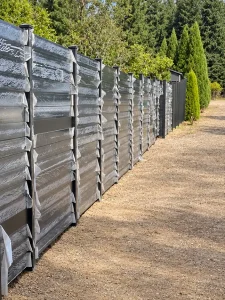
Aluminum Fence Quality Inspection Checklist Before Shipment
Check dimensions, fabrication, finish, accessories, packaging and loading records before an aluminum fence order leaves the factory. A clear inspection plan helps buyers identify discrepancies while correction is still practical.
View the Inspection ChecklistDiscuss Your Order RequirementsStart with the Approved Order Documents
A useful pre-shipment inspection compares the goods with an agreed specification. Prepare the purchase order, latest approved drawings, component list, finish sample, packing requirements and any project-specific inspection instructions.
Record the order number, drawing revision, production lot, inspection date and inspected item IDs. Agree the sampling plan and acceptance criteria before inspection. Where full inspection of a characteristic is required, state that explicitly rather than assuming a sample result covers every panel.

For custom orders, begin with our custom aluminum fence manufacturing service und quotation preparation guide.
Pre-Shipment Inspection: Six Main Checkpoints
| Inspection area | Check against the order | Evidence to record |
|---|---|---|
| 1. Dimensions | Panel size, profiles, gaps, diagonals, posts and mounting holes | Item ID, measurement, drawing reference and clear measurement photos |
| 2. Fabrication & welds | Joint positions, visible weld condition, alignment, sharp edges and distortion | Overview and close-up images; further test reports where specified |
| 3. Surface finish | Approved color, gloss, texture, coverage and visible defects | Sample comparison, defect locations and specified instrument results |
| 4. Accessories | Part numbers, compatibility, quantities, gate hardware and documentation | Component count sheet and labeled photographs |
| 5. Packaging | Protection, package strength, marks, dimensions and packed quantities | Before-closing photos, package IDs and packing list |
| 6. Loading records | Package tally, container condition, securing, container and seal identification | Sequential loading photos and final shipment record |
1. Verify Dimensions and Panel Geometry
Distinguish the panel’s outside dimensions from the installation opening and post center spacing. A product described as “6 ft” or “8 ft” still needs a dimensioned drawing showing exactly what that measurement represents.
- Measure panel height and width at the agreed reference points.
- Compare diagonals and check alignment, straightness and flatness against the approved criteria.
- Check slat or picket width, depth and clear spacing at representative locations.
- Verify post length, section, base plates and hole positions.
- Record profile wall-thickness measurements using the agreed method and suitable instruments.
- Separate special panels, corners and gate-adjacent items from standard modules.
For horizontal slat fences, review slat lines and end gaps. For vertical slat fencing und blade fencing, check upright orientation, spacing and alignment. Match posts and mounting components to the same drawing revision.
Photograph the measuring tool and relevant product edges clearly, with the item ID visible. A close-up of a tape without its reference points is difficult to verify.
2. Check Fabrication, Welds and Assembly
Use the approved construction method as the reference. Welded panels and mechanically assembled systems require different checks; a screw-fixed design should not be rejected simply because it is not welded.
- Confirm joint locations and weld extent against the fabrication drawing.
- Look for visible cracks, missing weld sections, open joints, excessive spatter and other visible discontinuities.
- Inspect the surrounding frame for distortion and misalignment.
- Check accessible edges for burrs and sharp projections.
- Verify the specified bolts, screws, inserts or rivets on assembled systems.
- Check trial-fit results where a representative assembly has been agreed.
Visual inspection cannot establish internal weld quality or verify structural capacity. If the project calls for weld procedure records, specialist inspection or testing, agree the scope and acceptance basis separately. Any rework should be documented and reinspected.
For matching aluminum gates, check frame geometry, hinge and latch positions, opening direction and hardware preparation. A factory trial fit does not replace final adjustment after installation.
3. Inspect Color, Coating and Visible Surfaces
Compare the order with the approved physical sample under agreed viewing conditions. Specify which faces are appearance-critical and record the viewing distance, lighting and defect criteria in the inspection instructions.
- Check color, gloss and texture for consistency across panels, posts and gates.
- Look for scratches, dents, exposed areas, blisters, runs or other visible finish defects.
- Inspect joints, edges, corners and accessible recesses for finish coverage.
- Check that protective film and labels do not damage the finish when removed as instructed.
- For woodgrain finishes, verify the approved pattern reference and grain direction.
Where coating thickness or adhesion checks are required, agree the method, equipment, sampling locations and acceptance criteria. Photographs alone cannot verify coating thickness, pretreatment quality or long-term corrosion performance. Color matching should not rely only on a phone screen.
For location-specific exposure considerations, review our coastal aluminum fence information and record the required finish specification before production.
4. Count and Identify All Accessories
Use a bill of materials for each fence module, gate type and installation arrangement. A shipment with the right number of panels can still be incomplete if brackets, post caps or fasteners are missing.
| Komponentengruppe | What to verify |
|---|---|
| Posts and caps | Type, height, quantity, finish and base-plate or embedded configuration |
| Panel brackets and connectors | Part number, orientation, mounting holes and compatibility |
| Fasteners | Specified material, size, quantity and clearly labeled bags |
| Gate hardware | Hinges, locks, handles, stops, rollers or other agreed components |
| Project documents | Approved drawings, packing list, assembly information and agreed inspection records |
Separate included components from items supplied by the installer. In particular, do not assume anchors, foundations, automation or tools are included unless they appear in the quotation and component list.
Label accessory cartons with the order reference, package number and intended fence or gate group. Photograph the contents before sealing the carton.
5. Check Export Packaging Before Closing
Packaging should suit the panel dimensions, finish, handling method and transport route. Confirm the packing arrangement before the inspection so the team can check protection before it is concealed.
- Verify separators prevent finished metal surfaces from rubbing against each other.
- Check corner and edge protection and ensure straps do not bear directly on vulnerable finish areas.
- Confirm bundles, pallets or crates can be handled using the agreed equipment.
- Check accessible fork-entry or lifting positions and package orientation.
- Record package dimensions, weight information, contents and identification marks.
- Agree moisture-management measures appropriate to the route and packing materials.
Match every package to the packing list. If solid-wood packaging is used, confirm the applicable destination requirements with the shipping team. A general packaging photo does not establish compliance.


6. Keep a Complete Loading Photo Record
Record loading in sequence so the buyer can connect the inspected goods, package tally and dispatched container. Photos support traceability but do not prove the adequacy of cargo securing or replace a loading plan.
- Before loading: show the empty container’s accessible interior condition and container identification.
- At the loading area: show package IDs, quantities and the packing arrangement.
- During loading: record successive rows or groups before later packages conceal them.
- Before closure: show the final accessible arrangement and securing details.
- After closure: record the closed doors, container number and readable seal number.
- Final reconciliation: match the loaded package tally with the packing list and shipment record.
The loading team should plan load distribution, blocking and securing for the cargo and container. Do not infer total weight or load balance from photographs alone. For LCL shipments, record the packages and handover details; final container and seal information may be controlled by the consolidator.
Suggested Photo File Names
Use your actual order and item IDs. Retain original-resolution files with the inspection report so details remain readable.
Record Findings and Close Open Issues
Use an inspection sheet with the following fields: item or package ID, requirement, observed result, evidence reference, status, corrective action, responsible person and reinspection result.
Mark each item as accepted, not accepted, pending verification or not applicable, using the agreed inspection terminology. Distinguish items not checked from items that passed. Attach photographs and measurement records to the relevant finding.
Before dispatch, reconcile quantities and close outstanding corrections according to the purchase agreement. Where shipment release requires buyer approval or an independent report, retain the agreed release record with the final document package.
WONDERFUL METAL: Define the Inspection Scope with Your Order
WONDERFUL METAL PRODUCTS CO., LTD supplies custom aluminum fences and matching gates, with customer coordination in Qingdao and manufacturing in Linqu, Shandong. Buyers can specify dimensions, finishes, accessories, packing and required inspection evidence as part of the order discussion.
Agree any inspection visit, third-party inspection, special test or loading-photo requirement before the production and dispatch schedule is finalized. Browse our project case collection and send your drawings to discuss the required supply scope.
Häufig gestellte Fragen
Should every fence panel be checked?
Agree the inspection scope and sampling plan for each characteristic. A sample inspection does not mean every panel was measured. State any full-inspection requirement in the order.
Can photos prove the alloy grade or coating performance?
No. Photos document visible condition and selected measurements. Material identity and specified performance may require traceable documents or agreed tests.
What if scratches are found before packing?
Record the defect and apply the agreed acceptance or repair procedure. Reinspect corrected items and document the result before release.
What photographs should a buyer request?
Request identified measurement images, fabrication and finish close-ups, accessory counts, packing details and sequential loading records. Agree the list before goods are packed.
Is a pre-shipment inspection a structural approval?
No. It checks the agreed order characteristics. Project design verification, wind requirements and installation approval are separate matters.