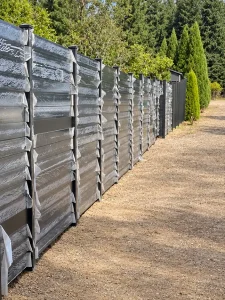
Can an Aluminum Fence Attach to Brick Columns or a House Wall?
Yes—when the fence system, connection hardware and supporting structure are suitable. Compatible wall-mount brackets or rail-end fittings can connect a panel to a verified brick column, masonry structure or structural house-wall support. The substrate and complete load path must be assessed before installation.
For fence contractors, distributors and project buyers, specify the panel, wall connection and anchors together. A flat wall surface alone does not establish that the structure can support the fence.

Choose the Correct Fence-to-Wall Connection
| Connection option | Possible use | Required confirmation |
|---|---|---|
| Wall-mount bracket / rail-end fitting | Connect a compatible rail to a reviewed support. | Rail dimensions, engagement, fixation, load capacity and anchor layout. |
| Project-specific frame connection | Terminate a framed privacy, slat or decorative panel. | Frame load path, fixing locations, tolerances and fabrication drawing. |
| Approved angled connector | Connect a fence approaching a wall at an oblique angle. | Actual angle range, locked position, engagement and design loads. |
| Independent end post | Support a fence beside a wall without loading it. | Foundation, post size, clearance and finished gap. |
Component availability and suitability must be confirmed for the selected Wonderful Metal system. A generic bracket description is not a stocked-product specification.
Brick Column or Brick Veneer? Identify the Structure First
A brick-faced column may contain a structural concrete or masonry core, while a house wall may have a thin brick veneer over another supporting structure. These require different fixing details.
- Identify solid brick, hollow masonry, reinforced core or veneer construction.
- Inspect cracking, loose units, deterioration and existing repairs.
- Confirm the intended anchor zone and support thickness.
- Check whether the complete column and its foundation can resist fence forces.
Do not treat decorative veneer or cladding as a structural anchor substrate. Where the support is uncertain, obtain a project assessment or consider an independent end post.
Attaching an Aluminum Fence to the Side of a House
Locate an appropriate structural fixing point and review the building envelope before drilling. Siding, stucco, insulation and rainscreen layers should not be compressed or used as the sole load-bearing support.
The connection detail should coordinate necessary standoffs or blocking, weatherproofing and differential movement. Preserve drainage paths, flashings, weep holes and any required ventilation clearances.
Confirm hidden services and fixing locations with the building information available. Where the house support or weatherproofing cannot be verified, a separately supported fence termination may be more appropriate.
Can the Fence Leave the Wall at an Angle?
An oblique fence line may need an approved adjustable connector, offset detail or independent post. Show the required plan angle on the drawing and identify whether it is measured from the wall face or from a perpendicular line.
There is no universal 45-degree capability across all brackets. Confirm the selected fitting’s permitted range, rail engagement, locking method and capacity at the proposed angle.
Plan-angle adjustment and elevation racking on a slope are different movements. Do not assume one connector accommodates both.
Select Anchors for the Actual Substrate
A bracket is only one part of the connection. The design must check the rail-to-bracket joint, bracket-to-anchor connection, anchor performance, supporting wall and its foundation.
- Specify anchor type and size for the identified material.
- Follow the anchor manufacturer’s requirements for embedment, spacing and edge distance.
- Confirm drilling, hole cleaning, installation torque and curing requirements where applicable.
- Use compatible exterior hardware and appropriate corrosion protection.
- Review reinforcement and concealed services before drilling.
Fixing into brick units or mortar joints must follow the selected anchor’s approved use and the project design. Neither location is universally suitable. Screw count alone does not establish connection strength.
Panel Style Changes the Wall Connection Requirements
Open aluminum picket fencing may use a different connection arrangement from horizontal privacy fencing. Solid or closely spaced infill generally creates greater wind demand than an otherwise comparable open panel.
For vertical slat panels, vertical blade fencing y louvre fencing, identify the frame or rail intended to transfer load. Do not attach a bracket to a decorative slat merely because it is accessible.
Panel height, span, exposure and connection position must be considered together.
When an Independent End Post Is Appropriate
A freestanding aluminum end post can provide a separate support where the wall cannot accept the connection, the building owner restricts drilling or the fence and building need separate movement allowances.
Select an embedded or base-mounted post according to the supporting foundation and project loads. A base plate still requires a suitable substrate and anchor design.
Draw the final gap between the post, panel and wall. Review privacy, access and pet or pool-barrier needs without bridging the gap with an unapproved structural detail.
Gate Loads Require a Separate Connection Review
Supporting a stationary fence panel and supporting a gate are different design tasks. Hinges introduce repeated forces and gate weight, while larger gates can add substantial wind and operating loads.
Do not assume a panel wall bracket can support a gate. Confirm hinge attachment, column reinforcement, foundation, latch position and operating clearances. Swing gate geometry and sliding gate guides or tracks require their own details.
Pool Barrier Connections & Finished Gaps
For aluminum pool fencing, review the opening at the wall, bottom clearance, nearby climbable features and gate arrangement under the requirements of the project jurisdiction.
Measure the completed connection, including offsets and changes in ground level. A strong fixing does not by itself establish pool-barrier compliance. Consult the US pool fence requirements guide for US project context, then confirm current local requirements.
Installation Workflow for Contractor Teams
- Confirm fence layout, panel style and termination location.
- Identify the support construction and inspect its condition.
- Approve the bracket, anchor and load-path details.
- Measure panel width, connection allowances and wall angle.
- Mark fixing locations and check concealed services.
- Install anchors and brackets to the approved instructions.
- Fit the panel without forcing, bending or misaligning the rails.
- Complete weatherproofing and inspect fixings, gaps and alignment.
Use the aluminum fence installation guide alongside the selected product and anchor instructions. On-site support conditions must match the approved connection assumptions.
Wholesale & OEM Supply: Coordinate Panels and Hardware
For wholesale aluminum fence orders, provide a schedule separating standard post connections, wall terminations and special angled interfaces. Coordinate brackets, rail sizes, coating and packaging by drawing revision.
Contractor supply y custom manufacturing enquiries should include the installation interface early. OEM labeling, custom connector feasibility, samples, MOQ, lead time and tooling are confirmed in the quotation.
Identify whether anchors are supplied with the order or sourced for the local substrate. The scope should state who approves the connection design and who verifies the existing structure.
What to Send for a Wall-Mount Fence Quote
| Input | RFQ details |
|---|---|
| Fence system | Style, height, panel width, rail/frame dimensions and quantity. |
| Wall or column | Photos, construction drawings, substrate type, thickness and condition. |
| Geometry | Wall angle, connection elevations, offsets and available fixing area. |
| Design conditions | Wind exposure, local requirements and project load criteria. |
| Hardware | Connector detail, anchor scope, exterior finish and material compatibility. |
| Project delivery | Drawing revision, inspection criteria, destination and packing requirements. |
Include gates, pool-barrier constraints and special clearances where relevant.
Frequently Asked Questions
Can I attach aluminum fence panels to brick columns?
Yes, if the column, foundation, anchors and selected fence connection are suitable. Verify the column construction and condition before choosing the hardware.
Can I screw the fence directly into house siding?
Siding alone should not carry the fence load. Review structural support, attachment details and weatherproofing, or use an independent end post.
Do wall brackets fit every aluminum rail?
No. Check the rail profile, bracket dimensions, engagement and fastening details for the selected system.
Are two screws enough?
There is no universal screw count. The complete connection must satisfy the design loads and anchor requirements.
Can the connector accommodate 45 degrees?
Only if the selected connector is approved for that angle and load. Confirm its angle reference and locking detail.
Can a wall bracket also support a gate?
Do not assume so. Gate weight, repeated operation and hinge loads require a separate support assessment.
Request a Project-Specific Fence Connection Quote
Send Wonderful Metal your fence layout, wall or column details, panel dimensions and photos to discuss compatible panel supply and connection requirements.
Explora project cases y commercial aluminum fencing for related applications.