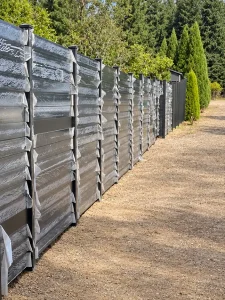
Does DIY Fencing Mean Anyone Can Install It?
No. DIY fencing describes an installation approach, not a guarantee that every person or site can manage the work. A suitable aluminum fence project still requires accurate layout, appropriate foundations, correct panel fitting and reliable gate operation.
Some homeowners can complete a suitable project with the right skills, tools, help and approved instructions. Contractors, distributors and wholesale buyers should define the installation scope and supplied components clearly before ordering.

Preassembled Panels Do Not Remove Site Work
Even when panels arrive preassembled, the installer must set the layout, install supports, connect sections and adjust gates. Other products may be supplied as components requiring assembly. Confirm the format in the quotation.
Pre-punched posts, bracket connections and rail engagement are system-specific. Do not assume every Wonderful Metal fence uses the same fittings or arrives ready to attach.
Assess Your Skills and Resources First
Measurement and layout
Can you read the drawings, mark accurate post locations, check levels and allow for the specified gate clearances?
Ground and mounting work
Can you carry out the approved foundation or connection work, using appropriate tools and assistance for the actual conditions?
Assembly and inspection
Can you follow the component instructions, protect the finish, adjust gates and recognize defects that need professional attention?
A Practical DIY Suitability Check
| Question | What it resolves |
|---|---|
| Is the layout approved? | Boundaries, fence height, gates and any local or community requirements. |
| Are underground services located? | The local process needed before excavation. |
| Are the mounting details clear? | Foundation or anchor requirements for the actual soil or substrate. |
| Is the site manageable? | Slopes, hard ground, restricted access or existing structures. |
| Are tools and help available? | Handling, alignment and installation tasks beyond one person’s resources. |
| Are inspections required? | Authority checks, pool-barrier duties or other special uses. |
| Are instructions complete? | Approved drawings, component references and the exact assembly sequence. |
Do Not Use Universal Hole Depths or Post Spacing
Dimensions such as 2 ft deep holes, a 4–6 in diameter or 72.5 in on-center spacing can belong to a particular supplier’s system. They are not universal Wonderful Metal installation requirements.
Foundation dimensions depend on soil, frost conditions, loads, fence height and the approved detail. Post spacing depends on actual panel connections and gate arrangements. Use the project drawings and supplied instructions before digging.
Arvustus aluminum post mounting options to discuss embedded or base-plate configurations.
Tools Depend on the Mounting and Assembly Method
A planning kit may include measuring and marking tools, levels, suitable excavation equipment for embedded posts, specified fastening tools and finish protection. The exact list follows the approved installation method.
Do not select an auger, anchor drill or fastener simply from a generic DIY list. Confirm substrate conditions and required access before renting equipment. Follow tool instructions and site procedures during the work.
When a Contractor or Project Professional Can Help
Unclear structural conditions
Existing slabs, retaining walls, decks or uncertain ground support need assessment before selecting foundations or attachments.
Complex layout and gates
Slopes, unusual spans and large or automated gates can require coordinated design and installation expertise.
Special safety duties
Pool barriers, elevated guards and rated security applications require their own approvals and evidence; a general DIY label does not establish suitability.
Fence Styles Have Different Installation Needs
Horizontal slat fencing, vertical slat panels ja picket fences differ in infill, connections and supporting requirements. More enclosed privacy layouts also change the loading discussion.
Racking and stepping on slopes are not interchangeable. Confirm whether the actual panel supports adjustment and within which limits. Do not force a rigid panel to follow a slope.
Gates Need More Than a Level Panel Run
Arvustus matching aluminum gates with their own supporting posts, hinges, latches and clearances. Fixed-panel mounting details are not automatically suitable for every gate.
For swing gates or sliding gates, confirm the complete hardware package and operating requirements. Follow applicable specialist instructions for automation.
Pool Fences Need the Local Approval Process
A DIY pool fence still needs to meet the requirements applicable to the installation. Confirm barrier geometry, openings, climbability and required gate operation before ordering.
Vaata US pool fence requirements guidance and check locally. Product instructions are not a substitute for permits, approved design or inspection.
DIY vs Contractor Cost: Compare the Whole Scope
DIY can change labor costs but may add equipment rental, tools, delivery handling and more of your own time. Include foundations, consumables, approvals and any corrective work in the comparison.
Request a professional quote with matching inclusions. See aluminum fence cost factors. No fixed saving or installation time is promised.
B2B Supply Checklist for DIY and Contractor Channels
| RFQ item | Confirm before production |
|---|---|
| Customer and site | Intended installer, location, application and access conditions. |
| Drawings | Fence runs, panel dimensions, post positions, slopes and gates. |
| Assembly format | Preassembled or component supply, and the actual connection type. |
| Mounting scope | Specified supports, foundations or anchors and design responsibility. |
| Component package | Panels, posts, brackets, caps, fasteners and gate hardware. |
| Documentation | Current installation instructions, care sheet and required evidence. |
| Packing | Component identification, finish protection and receiving procedure. |
| Commercial terms | Quantities, MOQ, lead time, delivery and written warranty. |
For wholesale fence panels, contractor supply ja OEM aluminum fence manufacturing, confirm documentation, labeling or packing requests in the quotation.
Inspect and Keep the Handover Records
Inspect connections, alignment, damage and gate operation, and complete any required authority checks. Keep the drawings, component list and installation records for future repairs.
Follow the supplied powder-coating care instructions. Installation damage, loose fittings and hardware wear need appropriate attention rather than routine cleaning alone.
DIY Aluminum Fence FAQs
Does DIY fencing mean anyone can install it?
No. Suitability depends on skills, tools, help, site conditions and the actual fence system.
Are all aluminum fence panels preassembled?
No. Confirm the assembly format and included components for your order.
Can I use a standard 2 ft post hole?
Do not assume so. Use the foundation detail approved for the site and loads.
Is 72.5 in spacing correct for every fence?
No. Post spacing follows the selected panel and connection details, including gate requirements.
When should I use a contractor?
Seek help for unclear mounting, complex sites, demanding gates or special safety requirements, and whenever the approved work exceeds your capabilities.
Can a DIY pool fence be compliant?
It must follow the applicable local process and requirements. DIY does not remove design, permit or inspection obligations.
What should distributors request for DIY customers?
Product-specific drawings, assembly instructions, a complete component schedule and clear information on installation responsibilities.
Discuss a Fence Supply Package for Your Installation Plan
Send Wonderful Metal your layout, quantities, preferred style, mounting conditions, gates, finish and destination. Explain whether the project will be installed by a homeowner or contractor so the supply scope can be discussed clearly.
Assembly format, technical suitability, instructions, warranty and delivery terms must be confirmed for the actual order.