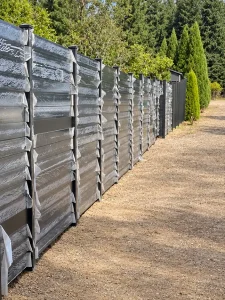
How Do You Attach an Aluminum Fence to a Wood Post?
Use a compatible mounting bracket or rail-end fitting to connect the aluminum fence rail or frame to a suitable timber post. Select the bracket, wood fasteners and post support as a complete connection; check the post condition and the panel loads before installation.
For contractors, distributors and OEM buyers, provide the rail profile, timber post details and project layout so the connection can be reviewed before ordering. A generic wall-mount fitting should not be assumed suitable for wood or for every aluminum panel.

Select a Bracket That Fits the Rail or Frame
| Component | What to verify |
|---|---|
| Rail-end bracket | Rail profile, insertion depth, retention method and load capacity. |
| Frame mounting bracket | Approved frame fixing points, hole locations and panel load path. |
| Wood-side fasteners | Structural suitability, diameter, effective penetration, spacing and corrosion compatibility. |
| Timber post | Dimensions, species or grade where relevant, condition, treatment and foundation. |
| Isolation detail | Compatibility of treated timber, aluminum, connector and fasteners. |
Bracket stock, sizes and compatibility must be confirmed for the selected Wonderful Metal system. A wall-mount casting designed for masonry may require a different fastening detail on timber.
Inspect Existing Wood Posts Before Reusing Them
Check the entire support, not just the visible face. An intact-looking post may have decay near ground level, loose foundations or weakened previous fixing points.
- Inspect rot, splitting, insect damage, movement and severe weathering.
- Check post plumb, dimensions and the available fixing area.
- Identify old holes and connections that reduce usable wood.
- Confirm the foundation and post can resist the new panel loads.
Do not cover a damaged post with a bracket and assume it has regained strength. Repair, replacement or a separate post may be necessary.
Choose Fasteners for the Timber and the Connection
Use fasteners specified for the structural connection and outdoor exposure. Ordinary interior screws or unverified deck screws should not be assumed suitable.
Confirm effective penetration into sound wood, allowing for bracket thickness and any approved isolation layer. Follow the fastener instructions for pilot holes, edge and end distances, spacing and installation.
Avoid overdriving or forcing the bracket against an uneven face. Screw count alone does not determine capacity: wood condition, fastener geometry, connection loads and the complete support all matter.
Pressure-Treated Wood & Aluminum Compatibility
Identify the timber preservative from the product label or supplier. Aluminum-contact requirements vary by treatment; some copper-based treatments restrict direct contact, while other treatments allow specified aluminum uses.
Follow the timber, connector and fastener manufacturers’ compatibility instructions. Where required, provide an approved separation membrane or other reviewed isolation detail. Do not assume powder coating alone satisfies every treated-wood contact requirement.
Select exterior fasteners and connectors that are compatible with the preservative, aluminum and exposure environment. Isolation should preserve connection support and drainage.
Measure the Panel Module Before Positioning Brackets
Measure the clear distance between the post faces and allow for the selected bracket dimensions, rail engagement and installation clearance. Panel width and post center-to-center spacing are different measurements.
- Mark the top and bottom connection elevations.
- Check the ground clearance across the full section.
- Coordinate corner, slope and gate interfaces.
- Use factory-sized panels where an existing opening does not match a standard module.
Only trim panels where the selected product permits it and follow the approved cutting and finish-protection instructions. Do not bend rails or force a rigid panel into an undersized opening.
Which Aluminum Fence Styles Can Connect to Wood Posts?
Aluminum picket fencing may use rail-end connections, while panneaux à lamelles verticales et horizontal privacy panels may need frame-specific brackets.
Pour louvre fencing, preserve the intended blade arrangement and frame support. Fixing to a decorative slat does not necessarily provide a suitable load path.
Confirm the selected model and its connection details rather than assuming all aluminum fence styles share one mounting system.
Privacy Panels, Wind & Mixed-Material Movement
Tall or closely spaced infill can increase wind demand on the timber post, bracket and foundation. Reusing posts from a lightweight open fence does not establish suitability for a new privacy panel.
Timber can shrink, swell or twist as moisture conditions change. Coordinate tolerances and any designed movement allowance without loosening structural connections or improvising oversized holes.
Keep the connection accessible for inspection and avoid details that trap water against the wood or metal.
Gate Connections Require Separate Review
Matching aluminum gates add weight and repeated operating forces. Do not assume the bracket used for a stationary panel can also support a gate.
Review hinge fasteners, timber post condition, gate span, wind exposure and post foundation. Swing gates et sliding gates require their own support details.
Where timber supports are inadequate, evaluate a dedicated aluminum gate or end post with a suitable foundation.
Pool & Pet Boundaries: Check the Finished Openings
Measure gaps at the timber post, below the panel and around gates after installation. For pool fencing, the complete barrier must satisfy the current requirements of the project jurisdiction.
Timber caps, nearby rails and other features may affect climbability. Consult the US pool fence requirements guide for US context and confirm local requirements.
For pet containment, consider the animal’s size and behavior as well as gaps and structural condition.
Installation Workflow for Contractor Teams
- Confirm the layout, panel model and post support conditions.
- Approve the bracket, wood fasteners and treatment compatibility detail.
- Measure openings and mark connection elevations.
- Prepare pilot holes where required by the specified fastening system.
- Install the isolation detail and brackets as designed.
- Fit rails or frames with the required engagement and retainers.
- Inspect alignment, ground clearance, fixing tightness and drainage.
- Record the connection detail for future inspection.
Utilisez le aluminum fence installation guide alongside the selected panel, connector and wood-fastener instructions.
Wholesale & OEM Supply for Mixed-Material Projects
Pour wholesale aluminum fence panel orders, identify which sections connect to timber, aluminum posts or other structures. Schedule brackets, panel dimensions and hardware by connection type.
Contractor supply enquiries should include timber post photos and specifications. Custom and OEM manufacturing requests can include profile dimensions, bracket interfaces, color matching, labeling and packaging for feasibility review.
Confirm connector availability, local fastener scope, sample approval, MOQ, lead time and any tooling charges in the quotation.
B2B RFQ Checklist: Panels for Timber Posts
| Input | Details to provide |
|---|---|
| Fence specification | Style, height, panel width, rail/frame dimensions and quantity. |
| Wood posts | Dimensions, species or grade where relevant, treatment, condition and photos. |
| Mise en page | Clear openings, connection elevations, corners, slopes and gates. |
| Loads & support | Wind exposure, privacy level, foundation information and project requirements. |
| Connection scope | Bracket detail, fasteners, isolation and responsibility for design review. |
| Procurement | Finish, drawing revision, inspection, packing and delivery destination. |
Foire aux questions
Can an aluminum fence attach to a wood post?
Yes, using compatible brackets and a suitable timber fastening detail, provided the post and foundation can support the loads.
Can I use any wall-mount bracket?
No. Verify rail fit, connection capacity and suitability for timber fasteners. Component names do not establish compatibility.
Can I reuse old wooden fence posts?
Only after checking their condition, foundation and suitability for the new fence. Decay or movement can require replacement.
Can aluminum touch pressure-treated wood?
It depends on the preservative and manufacturer’s instructions. Identify the treatment and provide approved isolation where required.
Are standard deck screws sufficient?
Do not assume so. Use the fasteners specified for the connection, wood and outdoor environment.
Can a panel bracket support a gate?
Do not assume it can. Gate weight, hinges, operation and support capacity require a separate review.
Request a Wood-Post Fence Connection Quote
Send Wonderful Metal your layout, timber post details, panel requirements and installation photos to discuss coordinated aluminum fence supply and connection feasibility.
Découvrir exemples de projets et commercial aluminum fence applications for related project context.