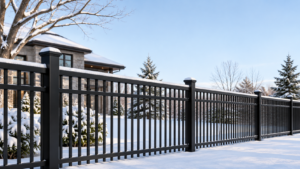
Aluminum Fence Winter Maintenance: Snow, Ice, Salt and Spring Checks
Practical care for powder-coated aluminum fences and matching gates in Canada and the northern United States.
An aluminum fence can be a practical choice for a snowy backyard, driveway or commercial boundary. It does not develop iron rust like unprotected steel, but winter care still matters. Road salt, snow-removal equipment, trapped moisture and ground movement affect different parts of the system.
The most useful winter routine is straightforward: keep snow piles away from panels, protect the powder coating, preserve drainage and check that gates work freely. These steps help you spot small problems before they become a repair project.
What Winter Can Do to an Aluminum Fence
Cold weather alone is only part of the exposure. A fence next to a salted road needs different attention from one at the back of a sheltered garden. A driveway gate also has moving parts and operating clearances that a fixed panel does not.
| Winter condition | What to watch for | Practical response |
|---|---|---|
| Plowed or shoveled snow | Dense piles pressing sideways against infill and posts | Choose a snow-storage area away from the fence. |
| Road salt and slush | Deposits on lower rails, brackets and post bases | Clean when temperatures allow safe washing and runoff will not freeze. |
| Ice around a gate | Restricted swing, obstructed tracks or a frozen latch | Remove the obstruction gently; do not force operation. |
| Freeze–thaw ground movement | Leaning posts, changed gaps or latch misalignment | Record changes and arrange an installation assessment. |
| Snow tools and equipment | Scratches, dents or bent components | Keep blades, shovels and snow blowers clear of the fence. |
1. Remove Snow Without Loading the Panels
Avoid using the fence as a retaining wall for winter snow. Even where the yard appears lightly covered, a driveway plow can build a dense bank against a small section. That creates a sideways load unrelated to the fence’s normal use.
Plan where shoveled snow will go before the first storm. Clear a path alongside gates and keep snow-blower discharge directed away from panels. If loose snow needs removing from a rail, use a soft brush without pushing or pulling the infill.
Do not pry apart ice attached to slats, strike posts with a shovel or hang tools from the top rail. Where a heavy bank has already bent a panel, keep people away from the affected section and ask an installer how to unload and repair it safely.
2. Clean Salt Residue When Conditions Allow
Salt can arrive as driveway de-icer, road spray or contaminated snow. Aluminum is corrosion resistant, not immune to corrosion. Persistent chloride exposure deserves attention, especially around damaged coatings, joints and dissimilar metal connections.
On a day above freezing, when water can drain and dry without creating ice, rinse loose contamination with clean water. If needed, wash with a soft cloth or sponge and a mild, non-abrasive, pH-neutral detergent approved for the finish. Rinse thoroughly. Architectural powder-coating guidance supports gentle washing; the actual coating supplier’s instructions take priority.
- Do not use wire brushes, abrasive pads or metal scrapers.
- Avoid unapproved strong acids, alkalis, solvents and concentrated cleaners.
- Do not direct high-pressure jets into joints, damaged coating or gate hardware.
- Keep de-icing products off the fence where possible; “pet-safe” does not establish coating compatibility.
Set the cleaning frequency by exposure rather than a fixed calendar. A fence receiving repeated roadside slush may need attention sooner than a protected garden boundary. Avoid washing during freezing conditions.
3. Treat Frozen Gates as an Obstruction Problem
If a gate will not open, check the ground, hinges, latch and any sliding track before applying force. Ice under the leaf can mimic a hinge problem. Repeatedly pushing a blocked gate can damage fittings or change alignment.
Remove loose snow with non-damaging tools and allow bonded ice to thaw naturally where practical. Avoid boiling water, open flames and hammering. Use only a lubricant or de-icing treatment approved by the hardware manufacturer.
For an automated gate, stop operation if its travel is blocked. Follow the operator instructions for isolation and manual release; do not repeatedly cycle the motor against resistance. Have safety devices and operation checked after clearance.
If a pool-barrier gate no longer closes and latches properly, restrict access to the pool until the barrier is restored. Snow accumulation can also change the effective height of a barrier, so keep the surrounding area under review.
4. Keep Existing Drainage Paths Open
Check visible drainage openings and post-base areas for leaves, dirt and packed snow. Water should be able to leave through the drainage features provided by the product design. Do not drill extra holes or modify caps without approval: an apparently simple change can affect coating protection, connections or the intended water path.
Check for standing water at concrete pads and bases when weather permits. Repeated pooling may need a grading or drainage correction rather than additional cleaning.
After the Thaw: A Spring Aluminum Fence Inspection
Compare the fence with photographs taken before winter. Walk both sides where accessible and check the whole run rather than only the visibly damaged section.
- Posts: Look for new lean, movement at the base or separation from adjacent paving.
- Panels: Check rails, slats and brackets for bending or looseness.
- Final: Note chips, blistering, unusual staining or white corrosion deposits; photograph them before treatment.
- Connections: Check for missing fittings or visible fastener corrosion. Tightening and replacement should follow the specified hardware requirements.
- Gates: Confirm free movement, consistent gaps and reliable latching. Check self-closing functions where fitted.
- Ground: Look for erosion, settlement and changed drainage around foundations.
Do not hide active corrosion or loose connections with touch-up paint. Ask for the approved repair procedure and investigate the cause first. A leaning post may require foundation work; adjusting the gate latch alone may only mask the issue.
Planning a New Fence for a Winter Climate
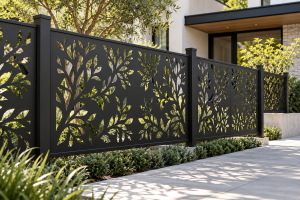
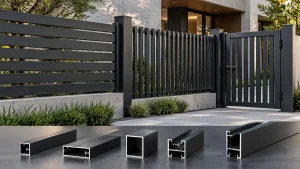
For a new aluminum fence system, discuss snow-storage locations, road-salt exposure, panel style, gate operation and post mounting before ordering. Full-privacy panels and open pickets behave differently under wind; neither should be treated as a snow-retaining structure.
Wonderful Metal manufactures aluminum fences and gates in Linqu, Shandong, with customer communication and export coordination from Qingdao. Share your site layout and local installation requirements so panel dimensions, posts, finish and hardware can be reviewed together. Foundation depth, anchors and structural suitability should be determined for the actual site.
Frequently Asked Questions
Can aluminum fencing stay outside through a Canadian winter?
Outdoor aluminum fencing can be used in cold climates when the complete system is appropriately specified and installed. Winter performance depends on foundations, drainage, connections, finish and exposure, not material alone.
Does an aluminum fence rust in snow?
Aluminum does not form iron rust, but it can corrode. Steel hardware can also rust depending on its material and protection. Inspect both the aluminum finish and the fittings.
Can I use driveway ice melt beside the fence?
Follow the ice-melt label and coating supplier’s guidance. Minimize contact and splash, keep granules off the fence, and clean residue when weather allows. No general ice-melt label guarantees compatibility with every finish.
Why has my gate become misaligned after winter?
Possible causes include ice obstruction, loose hardware, foundation movement or impact. Remove obstructions and have the source checked before adjusting hinges or latches.