Capping Fence Posts: A Contractor’s Guide to Aluminum Post Caps
Choose caps that fit the profile, coordinate with the finish and work with the post’s installation and maintenance details.
A practical guide to post cap styles, measurements, attachment methods and project ordering.
Discuss Your Post & Cap Requirements
Quick Summary
Capping fence posts closes the exposed post top and gives the fence a finished appearance. A correctly selected cap can reduce direct rain and debris entry, cover the cut edge and coordinate the post with adjacent panels and gates.
The right cap depends on the exact post profile, wall thickness, internal webs, retention method and finish. A cap is not automatically watertight, and it does not replace the drainage or ventilation details required by the post system. Specify caps with the posts rather than choosing them after installation.
What Does Capping Fence Posts Actually Do?
Hollow fence posts need a deliberate top detail. Leaving an intended cap off exposes the cavity to rain, leaves and insects and leaves the cut edge visible. A suitable cap provides a neat closure and helps keep the post top consistent with the rest of the fence.
On aluminum systems, moisture control remains relevant even though aluminum does not develop steel-like red rust. Posts may contain steel reinforcement, fasteners or other components that require appropriate protection. Water may also enter through connections or form through condensation, so the complete moisture-management detail matters.
WONDERFUL METAL offers aluminum fence and gate post systems. Discuss the top cap alongside the post structure, mounting method and panel connection layout. Confirm the selected cap and quantity in the quotation and bill of materials.
Fence Post Cap Types: Appearance and Fit Are Separate Choices
Flat, pyramid and ball describe the visible shape. Internal sleeve and external socket describe how a cap fits the post. For example, a flat cap can use either an internal insert or an external skirt; the terms are not interchangeable.
| Cap Type or Feature | Where It May Fit | What to Confirm |
|---|---|---|
| Flat / low-profile top | Modern slat fences, privacy boundaries and simple commercial designs. | Top shape, skirt depth, joint detail and whether the selected model sheds water as intended. |
| Pyramid top | Traditional or ornamental fence layouts. | Peak height, approved appearance and compatibility with the post profile. |
| Ball / decorative top | Selected entrance, end or gate posts. | Overall dimensions, secure attachment and any restrictions on projecting details. |
| Internal insert / sleeve | A closure with a small visible exterior edge. | Actual internal opening, wall thickness, ribs and insertion depth. |
| External socket / skirt | A cap that fits over the post exterior. | Finished outside size, corner radii, coating allowance and clearances. |
| Solar or illuminated cap | Optional decorative marker lighting. | Availability, fit, exposure rating, battery access, charging conditions and serviceability. |
These are general selection categories, not a statement that every style is stocked by WONDERFUL METAL. Send a reference image or drawing to confirm the cap design available for your order.
Choosing Cap Materials for Aluminum Fence Posts
Aluminum caps can coordinate well with aluminum posts, but material alone does not guarantee fit, retention or identical color. A properly specified exterior polymer cap may also be suitable for a particular system. Avoid assigning a fixed lifespan simply from the material name.
| Materiale | Reasons to Consider It | Checks Before Approval |
|---|---|---|
| Formed or machined aluminum | Coordinated metal appearance and compatible finish options. | Geometry, retention, coating preparation and contact details. |
| Cast aluminum | Can accommodate decorative shapes or thicker profiles. | Casting quality, fit tolerance, finish texture and weight. |
| Exterior-grade polymer | Can provide a lightweight insert or snap-fit closure. | UV stabilization, temperature range, fit and replacement availability. |
| Copper / brass or mixed-metal detail | A deliberate decorative effect where specifically required. | Engineered isolation, runoff effects, sealant compatibility and maintenance. |
Galvanic corrosion needs an electrical path and an electrolyte. A small pad alone may not isolate a cap if a screw bridges the metals or if runoff creates another problem. Follow the supplier’s complete connection detail rather than improvising dissimilar-metal combinations.
For exposed coastal sites, identify salt exposure at quotation stage. Confirm the finish, compatible hardware and care instructions for the selected assembly.
How to Measure a Fence Post for a Cap
Measure the real profile, not just the nominal product label. A “4 × 4” cap intended for nominal timber may not fit a 4-inch aluminum section. Likewise, 100 mm and 4 inches are not the same dimension: 4 inches equals 101.6 mm.
- Measure the outside width and depth. Check both directions and include the finished coating. A rectangular post needs both dimensions.
- Record the internal opening and wall thickness. Internal webs, reinforcing tubes and corner geometry can obstruct an insert cap.
- Check the available engagement depth. Identify brackets, screws, wiring or reinforcement near the top of the post.
- Confirm the cap fitting method. An internal insert and an external socket need different dimensions and tolerances.
- Approve the fit and finish. For replacement or bulk orders, use a drawing and a sample fit check before releasing the full quantity.
Metric and Inch Sizes: Do Not Substitute by Eye
A label such as 90 × 90 mm describes the nominal post section, not the cap’s manufacturing dimensions. Provide the post drawing, wall thickness and finished measurements so the supplier can establish the correct mating fit.
Match Caps to the Post Structure
Line posts, corner posts and gate posts can have different sections or internal arrangements. Separate them in the cap schedule even if the finish is identical. A reinforced gate post may have less insert clearance than a hollow line post.
Embedded and Base-Plate Posts
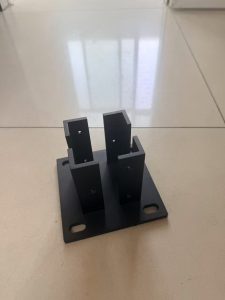
The mounting method does not determine the top-cap fit by itself. Verify the extrusion and connection details for each model. A base cover at ground level is a separate component from the cap at the post top.
Reinforced Posts
If the post contains a steel tube or internal webs, show these on the drawing. Confirm the moisture-management detail and the clearance needed to fit or remove the cap.
Gate and Service Posts
Coordinate top caps with cancelli in alluminio coordinati, hinge fixings, conduits and any service access. A cap should not interfere with moving hardware or prevent access required by the approved installation.

Post Cap Installation Methods
| Method | Practical Use | Installation Considerations |
|---|---|---|
| Press-fit / snap-fit | Clean appearance where the cap is designed to engage the post. | Check specified interference or locking features. Friction alone does not establish a watertight seal. |
| Screw-retained | Positive retention with removal for inspection where designed. | Use the specified screw type, length, position and tightening method. Avoid internal components. |
| Adhesive-bonded | A concealed attachment only where approved for the system. | Confirm adhesive compatibility, preparation, cure conditions and the replacement method. |
| Sealed joint | Weather detailing where the selected assembly requires it. | Use an approved compatible sealant and preserve required drainage or ventilation paths. |
Do not add sealant or structural adhesive to every cap as a default. Some systems rely on a specific removable fit or ventilation detail. An unsuitable adhesive can damage the finish, block drainage or make future servicing difficult.
A Practical Installation Sequence
- Check the cap code against the post schedule and inspect both parts for damage.
- Finish authorized post cutting or drilling, remove burrs and clean away swarf using approved methods.
- Dry-fit the cap and check clearance above internal webs, reinforcement and hardware.
- Apply only the specified retention and sealing method. Follow preparation and cure instructions.
- Seat the cap evenly without forcing it or damaging the coating. Use protective tools only as permitted.
- Check engagement, alignment and retained drainage paths, then record any defects before handover.
Drainage, Condensation and Water Entry
A top cap reduces direct exposure, but water control must be considered across the post. Rain can enter through brackets or joints, and condensation can form internally. Simply sealing the top more aggressively does not solve water already trapped lower down.
Follow the designed drain and vent arrangement. Do not block factory openings with sealant, soil, concrete or a base cover. Do not drill extra drain holes without approval: their position may affect the finish, reinforcement or installation detail.
On replacement work, investigate water accumulation or staining before fitting a new cap. Check whether the original closure is missing, the connections admit water, or a drain path has become obstructed. A new top cap may be only one part of the repair.
Coating and Color Match: Approve a Reference Sample
Matching a color name is not enough. “Matte black” can vary in hue, texture and gloss, and a cast cap may reflect light differently from an extruded post. Specify the color reference and appearance sample for posts, caps, panels and gates together.
Ask whether the cap can be finished in the same coordinated production order. Where a wood-look design is requested, approve a representative sample and confirm the available method; do not assume every part uses an identical multi-layer process.
Coating test reports, where required, should identify the relevant finish, substrate, preparation and acceptance criteria. A test-method name alone is not a certification or a guaranteed service-life statement. Confirm the project’s documentation requirements before production.
Replacement caps can also look different from an existing weathered run. Retain the original product code and finish reference, and compare a replacement sample when appearance is critical.
Common Cap Problems and How to Avoid Them
| Problem | Likely Checks |
|---|---|
| Cap rattles or comes loose | Wrong mating size, insufficient engagement, missing retention or damaged locking features. |
| Cap will not seat evenly | Internal ribs, reinforcement, burrs, coating buildup or a mismatched profile. |
| Finish becomes scuffed during fitting | Excessive force, unprotected tools or incorrect cap dimensions. |
| Water remains inside the post | Blocked drainage, another entry path or a missing moisture-management detail. |
| Cap color differs from the fence | Different color reference, gloss, substrate texture or weathering. |
| Cap prevents later servicing | Permanent adhesive or insufficient clearance at a hardware-bearing post. |
Do not assume a panel wind rating proves the cap will remain attached. Cap retention must be suitable for the selected detail and exposure. If retention evidence is required, request it for the actual cap-and-post combination.
Plan Caps with the Fence and Gate Package
Modern Slat Fencing
Low-profile caps can support a clean boundary design. Coordinate post height and top alignment with horizontal slat fence or vertical slat fence layouts.
Ornamental Fencing
Review decorative cap proportions together with the rail and picket details. Explore aluminum picket fencing when planning an open boundary.
Pool and Gate Areas
Check the overall post, cap and hardware layout against local requirements. A cap alone does not establish pool fence compliance.
Post Cap Cost and Order Quantities
Price depends on cap geometry, material, finish, tooling and quantity. Decorative and illuminated products may add cost and future service requirements. Avoid using a fixed percentage of panel cost as a universal budgeting rule.
List the quantity by post type rather than assuming every cap is interchangeable. Include line, end, corner and gate positions, plus any agreed spare pieces. Confirm whether caps are included in the post price or quoted separately and whether retention screws or other accessories are supplied.
For repeat supply, request labeled packaging with cap model, finish and compatible post references. This can reduce sorting errors on site and simplify replacement ordering. See our wholesale aluminum fence supply e contractor supply options for coordinated project enquiries.
Specification Checklist Before You Order
| Order Detail | What to Provide or Confirm |
|---|---|
| Post geometry | Profile drawing, finished outside dimensions, wall thickness and internal arrangement. |
| Cap geometry | Visible style, internal insert or external socket, engagement depth and clearances. |
| Material and finish | Selected material, color reference, gloss/texture and approved sample. |
| Retention | Press-fit, snap-fit, screws or approved adhesive; required accessories. |
| Weather detail | Sealing requirements, drainage/ventilation and exposure conditions. |
| Access requirements | Whether the cap must be removable for hardware or wiring service. |
| Schedule and quantity | Separate post types, piece counts, spares and packing labels. |
| Delivery | Project quantity, requested schedule and destination. |
For a replacement enquiry, send photographs of the existing cap, the post opening and a measured sketch. An unscaled photograph alone may not show the differences that determine fit.
Frequently Asked Questions
Do aluminum fence posts need caps?
Use the top closure specified for the post system. A cap generally covers the exposed opening and reduces direct entry of rain and debris, while giving the fence a finished appearance. Follow the full drainage and ventilation detail as well.
What size cap fits a 4 × 4 aluminum post?
Measure the actual post. A true 4-inch section is 101.6 mm, while nominal timber and metric sections can differ. Confirm whether the cap fits inside or outside and account for wall thickness, corner shape and internal ribs.
Are aluminum post caps waterproof?
Not automatically. Weather resistance depends on the design and installation. A press fit alone should not be assumed watertight, and a top cap does not prevent condensation or water entering elsewhere.
Should I glue every fence post cap?
No. Use adhesive only where the supplier approves it. Some closures need to be removable, and extra adhesive or sealant can block intended drainage or damage the finish during removal.
Can a damaged cap be replaced?
Usually a replacement can be considered, but the removal method depends on the original attachment. Identify the profile and finish before ordering; removal of bonded caps may require particular care.
Are plastic caps always unsuitable?
No. A suitable exterior-grade polymer cap can be appropriate in a designed system. Review the UV and temperature suitability, fit, retention and maintenance expectations of the actual product.
Can I add solar post caps?
Check availability and compatibility first. Confirm the housing size, sun exposure, battery replacement access and outdoor rating. Decorative solar caps should not be assumed to provide required safety lighting.
Are caps included with WONDERFUL METAL posts?
Confirm inclusions in the project quotation and bill of materials. Specify the cap type, finish, quantity and retention accessories so the order scope is clear.
Can decorative caps be used on gate posts only?
Yes, a mixed style may be a deliberate design choice if the fittings, finish and overall layout are suitable. Approve the visual arrangement and clearances before ordering.
Complete the Fence Detail Before Production
Request Matching Posts, Caps and Fence Components
Send WONDERFUL METAL your post dimensions or drawing, preferred cap shape, finish, quantity and delivery destination. Include any internal reinforcement, gate hardware or access requirements that affect the top detail.
Our team can review the requested cap-and-post arrangement with the wider fence or gate supply package.
Richiedi un preventivo per il progettoExplore Aluminum Posts