Gate Hardware Kit: A Contractor’s Guide to Hinges, Latches and Installation
Build a clear component specification for your aluminum gate, from the hinge connection to the latch and closing function.
Compare hardware requirements, avoid fitment errors and define the complete supply package before ordering.
Discuss Your Gate Hardware Requirements
Quick Summary
A gate hardware kit connects the moving gate to its supports and provides the required closing, latching and access functions. The contents depend on the gate type: a swing gate needs hinges, while a sliding gate needs its own compatible roller, guide and support arrangement.
For aluminum gates, specify hardware using the actual leaf dimensions, weight, infill, mounting details, exposure and frequency of use. Confirm every inclusion in the quotation; the word “complete” does not establish what is supplied.
What Does a Professional Gate Hardware Kit Include?
The right kit is a coordinated bill of materials, not simply a bag of hinges and screws. It should identify the gate model, component quantities, mounting details and any excluded site work. A closer, lock cylinder, ground receiver or foundation anchor may need to be ordered separately.
| Component Group | Typical Items | What to Confirm |
|---|---|---|
| Swing support | Hinges, pivot pins, mounting plates and approved fixings. | Permitted gate width and weight, hinge spacing, opening angle and substrate. |
| Latching and locking | Latch, strike, keeper, handles, cylinder or lock body. | Handing, clearances, access from each side and locking function. |
| Closing control | Self-closing hinges or a separate closer where specified. | Compatibility, temperature range, adjustment and closing requirements. |
| Stops and restraint | Opening/closing stops, drop bolts or leaf restraints where required. | Locations, receiver details and interaction with any automation. |
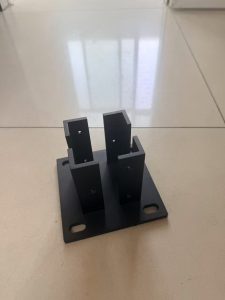
| Post-side connections | Backing plates, inserts, brackets or specified fasteners. | Post wall, reinforcement, thread engagement and access for installation. |
| Sliding hardware | Track and wheels, or a matched cantilever carriage system, plus guides and catches. | System geometry, load limits, travel path and support design. |
Review the WONDERFUL METAL aluminum gate range first, then discuss the hardware scope for the selected design. A manual garden gate and an automated driveway gate require different packages.
Choose the Kit by Gate Type
| Gate Application | Selection Priorities | Related Systems |
|---|---|---|
| Pedestrian or garden gate | Clear opening, convenient latch operation, hinge adjustment and any closing requirement. | Aluminum swing gates |
| Privacy gate | Actual leaf weight, wind area, frame stiffness and hinge-side connections. | Privacy and semi-privacy fencing |
| Double swing entrance | Both leaf sizes, meeting gap, stops, inactive-leaf restraint and operating sequence. | Driveway gate options |
| Sliding entrance | Compatible rollers or carriages, guides, receiver, retention and full travel envelope. | Sistemi di cancelli scorrevoli |
| Pool barrier gate | Locally required barrier, closing, latching and release arrangements. | Pool fence systems |
Do not combine incompatible tracked and cantilever components into one generic sliding kit. A cantilever gate has a support and counterbalance arrangement that must be selected as a system.
Hinge Selection: Weight Is Only the Starting Point
Two gates with the same weight may create different hinge loads if their widths or hinge spacing differ. Use the hardware manufacturer’s selection data for the actual leaf dimensions, mass, mounting configuration and intended use.
Read the Rating Correctly
Confirm whether a published load applies to one hinge, a pair or an installed set. Do not add individual ratings or apply a universal safety multiplier unless the manufacturer’s selection method permits it. Identify restrictions on leaf width, opening angle and mounting orientation.
Use the Specified Number and Spacing
There is no universal rule requiring three hinges above a particular height or weight. Some designs use two correctly selected hinges; others require additional supports. Multiple hinges must share an aligned axis, and an extra hinge can cause binding if installed incorrectly.
Adjustment and Service Access
Adjustable hinges can help achieve the approved gaps and latch alignment, but adjustment is not a substitute for a moving post or unsuitable foundation. Leave the access needed for adjustment, replacement and any lubrication specified by the hardware supplier.
Send the Gate Drawing with the Hardware Enquiry
Include width, height, weight, infill, hinge locations, opening direction and the post section. This is more useful than requesting a “heavy-duty hinge” without dimensions.
Latch and Lock Options by Application
Start with how people should use the entrance. Does it need operation from one or both sides? Must it self-latch? Is keyed access required? Does it form part of an escape route? These decisions influence the hardware and the frame preparation.
| Funzione | Possible Hardware | Important Checks |
|---|---|---|
| Simple garden access | Gravity or spring latch. | Operating reach, closing gap, strike position and any locking need. |
| Keyed residential access | Gate lock, cylinder and handles or another suitable lockable arrangement. | Backset, handing, weather exposure and release from each side. |
| Controlled shared entry | Compatible electronic lock or strike with the access system. | Power, egress behavior, weather rating, wiring and service access. |
| Regulated barrier | Specified self-latching and closing hardware. | Applicable local requirements for the complete gate arrangement. |
A drop bolt holds a leaf in a position; it is not automatically a substitute for a security lock or an emergency-egress device. Select the function deliberately and approve the installed detail before drilling the frame.
Gate Closers: Check Fit, Climate and Closing Performance
A closer may be integrated into a hinge or installed as a separate mechanism. Select it for the gate dimensions, mounting geometry, expected use and operating temperature. Brand categories such as hydraulic or spring alone do not establish performance.
Where self-closing and self-latching behavior is required, both functions must work together. A gate that returns toward the post but stops short of the strike does not complete the intended operation. Set the closer in accordance with its instructions and test from the positions required for the installation.
For pool projects, obtain the applicable local barrier requirements before finalizing gate construction or hardware. Do not assume one latch position, height or closing arrangement applies throughout Canada or across other export markets.
For ordinary residential access, confirm whether a closer is requested. For commercial access, coordinate accessibility, egress and property-management requirements with the responsible designer.
Hardware Materials and Aluminum Compatibility
Dissimilar-metal contact can contribute to galvanic corrosion when moisture provides an electrolyte, but mixing metals does not automatically make a kit unsuitable. Stainless steel and protected steel components may be used with aluminum where the complete connection detail is appropriate.
Specify fastener materials, protective finishes and any isolating washers, sleeves or sealants required by the approved detail. Consider salt exposure, drainage and coating damage. A coating on its own should not be assumed to isolate every loaded or moving contact indefinitely.
Do not replace a supplied fastener with a visually similar alternative without checking its material, dimensions and connection requirements. The post wall, reinforcement and mounting plate determine which fixing method is appropriate.

Post Connections and Foundations: Where the Loads Go
The hinge connects to a post or wall, and that support transfers loads to a foundation or structure. Every part of that path needs to be suitable. A strong hinge cannot correct inadequate post reinforcement or an unsuitable substrate.
Confirm the actual wall thickness and internal arrangement of the aluminum gate post. Some connections require backing plates, inserts or other reinforcement. Do not prescribe lag screws, through-bolts or welds for every post without reviewing the section and mounting detail.
Foundation depth and dimensions depend on the gate, wind, soil, frost and local design requirements. There is no universal three-foot burial depth or rule that every gate post should be six inches deeper than a line post. Base plates likewise need verified anchors and a suitable supporting structure.
For double gates, define leaf restraint and receivers in the drawings. Any ground receiver must be coordinated with paving, drainage and underground services; a fixed insertion depth is not appropriate for every product.
Installation Checklist: Before, During and After
Before Installation
- Check the bill of materials and hardware codes against the approved gate drawing.
- Verify the opening, post alignment and full swing or sliding clearance, including changes in ground level.
- Inspect the frame, posts, finish and hardware for damage or missing parts.
- Confirm foundations have reached the required strength and that any local services are complete.
During Installation
- Follow the specified drilling dimensions, mounting positions, fasteners and tightening instructions.
- Support the leaf during fitting and check hinge or guide alignment before applying the full load.
- Check free movement before positioning and adjusting the latch or closer.
- Install stops, restraint and receivers as shown in the selected system details.
Commissioning and Handover
- Test the complete travel range, latching, locking and closing functions as applicable.
- Inspect connections and recheck fixings only in the manner required by the hardware instructions.
- Record settings and provide the care, inspection and replacement-part information.
- For automation, have the qualified installer commission the operator and required protective devices.
Do not assume a set number of opening cycles or a routine retightening step applies to every product. Follow the relevant installation and commissioning instructions.
Avoid These Common Hardware Mistakes
| Mistake | Better Specification |
|---|---|
| Choosing hinges on weight alone | Include width, hinge spacing, wind exposure and mounting geometry. |
| Guessing the clearances | Use the actual hinge and latch dimensions before setting support spacing. |
| Forcing a gate over sloping ground | Measure the entire travel path and resolve the opening geometry. |
| Using generic fixings in an extrusion | Confirm the post section and approved reinforcement or fixing details. |
| Assuming all accessories are included | Approve a component-level bill of materials and supply boundary. |
| Treating adjustment as a repair for structural movement | Investigate post, foundation and connection conditions first. |
For a sloping driveway or restricted swing arc, review a sliding gate layout before fabrication. Sliding systems need their own travel space, supports and maintenance provisions.
Sourcing Gate Hardware with a Matching Fence Package
Coordinating gate, posts and hardware with one supplier can simplify fit checks, but compatibility still needs to be documented. Request component references, permitted leaf dimensions, mounting details, finish information and installation instructions.
WONDERFUL METAL can discuss hardware requirements alongside custom gate fabrication and matching fence supply. Confirm which hardware is included, which items are sourced locally and who is responsible for installation or automation. Do not assume every gate model includes a closer, motor or access-control equipment.
Contractors can review project supply for contractors; distributors can explore wholesale fence packages. Coordinate matching horizontal slat fence or vertical slat fence finishes at the same time.
| Send with Your Enquiry | Details |
|---|---|
| Gate layout | Single/double swing or sliding; leaf dimensions, weight and infill. |
| Support drawing | Post or wall section, material, reinforcement and fixing access. |
| Operation | Handing, opening angle, traffic frequency and lock/closer needs. |
| Environment | Location, temperature range, salt exposure and wind conditions. |
| Scope | Required component list, automation interfaces, quantities and delivery destination. |
Frequently Asked Questions
What is included in a gate hardware kit?
It depends on the quotation. Swing kits commonly include hinges, a latch and fixings, while closers, locks, stops, post connections or automation may be separate. Sliding kits require a different component schedule.
How many hinges does an aluminum gate need?
Use the count and spacing approved for the actual gate and hinge product. Height or weight alone cannot establish a universal answer.
Can stainless hardware be used with an aluminum gate?
It may be suitable with an appropriate connection detail. Confirm materials, finishes, isolation where required, drainage and exposure rather than judging compatibility by metal names alone.
Will adjustable hinges fix a sagging gate?
They may correct minor alignment within their adjustment range. Investigate post movement, frame distortion, unsuitable connections and ground clearance before treating adjustment as the solution.
Do I need a closer on every gate?
Requirements depend on the application and local rules. Confirm any pool-barrier, egress or project requirement before selecting the gate and hardware.
How do I select hardware for cold weather?
Use the product’s published temperature range and maintenance instructions. Confirm the expected site conditions; do not assume every closer or hinge within one product category has the same performance.
Are gate hardware components guaranteed to last as long as the fence?
Service life depends on exposure, cycles, product quality and maintenance. Moving parts may need service or replacement before the fence panels, so retain component references and inspection instructions.
Are automation parts included with an aluminum gate?
Only if identified in the quotation. An automation-ready frame does not by itself include the operator, controls, protective devices, electrical work or commissioning.
Specify the Hardware Before Fabrication
Plan Your Gate and Hardware Package
Send WONDERFUL METAL your gate dimensions, post drawing, operating requirements and destination. Include the desired latch, lock, closing function and any automation plan so the supply scope can be reviewed together.
Request a Gate Package QuoteScopri i cancelli in alluminio